The Big What If? / YoStella! Newsletter
The AI Revolution Is Coming in a Brown Box.
Some assembly required. Forklift not included.
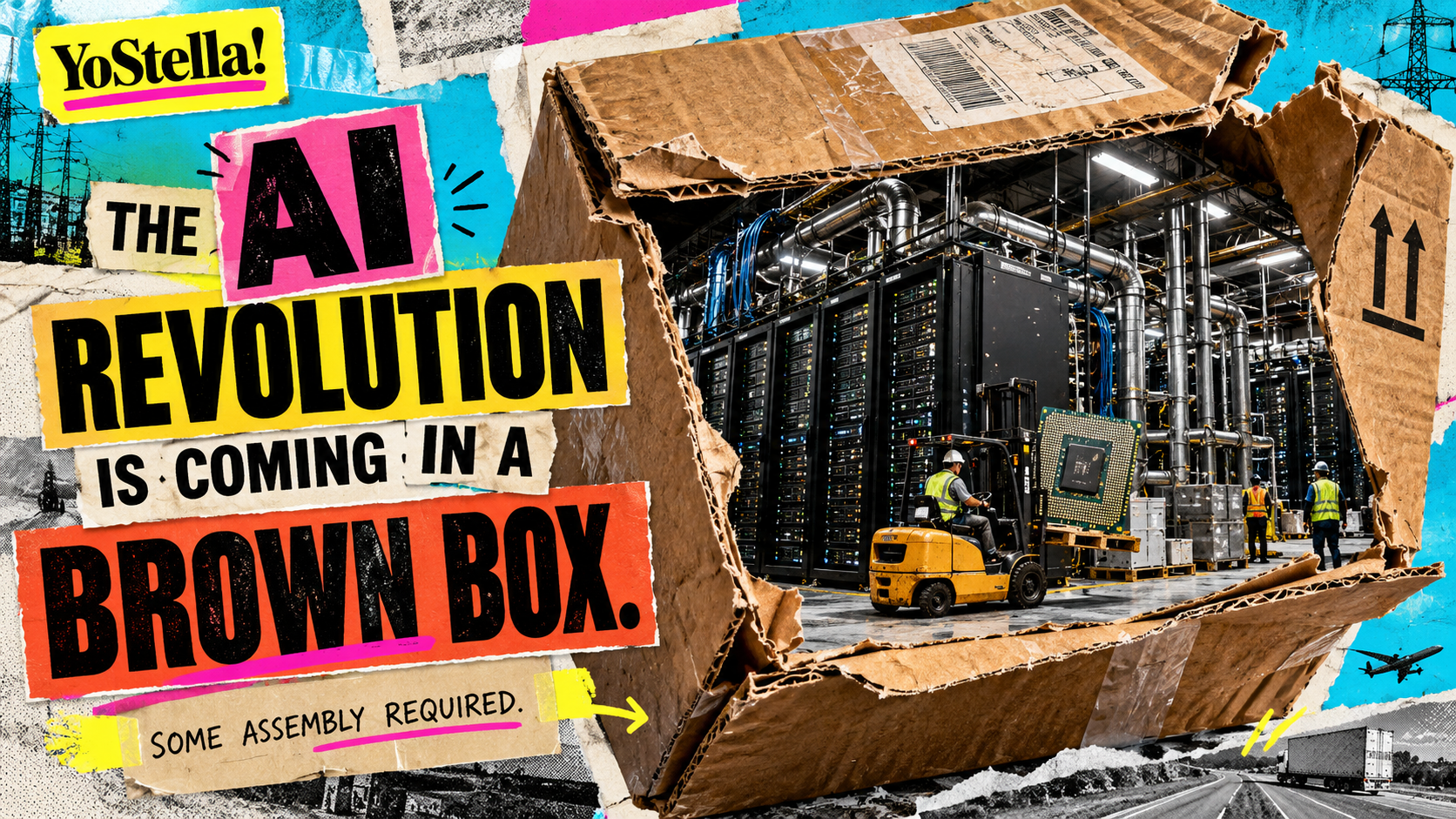
Imagine the future of artificial intelligence arriving at a loading dock. A truck backs up, somebody wearing a fluorescent yellow vest checks the paperwork, and a guy named Dave wonders why the shipment weighs so damn much.
Inside those boxes? Some of the most sophisticated technology humanity has ever created. Outside? Dave and his forklift.
Welcome to the AI revolution.
We’ve spent years imagining a future where machines write code, solve complex problems, and eventually do practically everything. Apparently, everything doesn’t include unloading the truck.
UPS sees an opportunity. During its October 27 earnings discussion, CEO Carol Tomé described an estimated $15 billion annual logistics market associated with the exploding demand for AI data centers. That’s a potential market, not revenue UPS has already earned.
The company is already transporting advanced processors, managing international freight, and delivering specialized equipment. Its high-tech small-package business grew 30% year over year in the third quarter, albeit from a relatively small base.
Here’s the wonderful absurdity. One of humanity’s most ambitious intellectual projects is creating enormous demand for cardboard boxes, warehouses, truck drivers, electricians, cooling systems, and people who know how to maneuver expensive equipment through impossibly narrow doorways.
We’ve invented an extraordinary vocabulary for AI. Inference. Tokens. Neural networks. Reasoning models. But try building a functioning data center with vocabulary. You’ll need concrete, steel, electricity, plumbing, and enough cable to make an electrician reconsider his career choices.
UPS isn’t simply chasing more deliveries, either. It’s moving away from lower-margin business while pursuing specialized, higher-value logistics work. In a world obsessed with making everything digital, there’s growing commercial value in getting complicated physical things done correctly.
And that’s where the story becomes interesting for the rest of us.
What if the biggest opportunity created by artificial intelligence isn’t becoming an AI company? What if it’s becoming indispensable to one?
A specialized manufacturer. An electrical contractor. A cooling-system expert. A logistics company. Businesses that make the extraordinary technology actually work in the ordinary world.
Of course, there’s no guaranteed gold rush. Data-center spending could slow, projects could stall, and competition will follow the money. But the opportunity is real enough to make UPS pay attention.
Meanwhile, somewhere in Silicon Valley, engineers are building machines that might change human intelligence forever.
And somewhere in a warehouse, Dave is yelling, “WHO THE HELL PACKED THIS THING?”
Some assembly required.