The Big What If? / YoStella! Newsletter
The Hackers Are in the Freezer
When cyber goes physical.
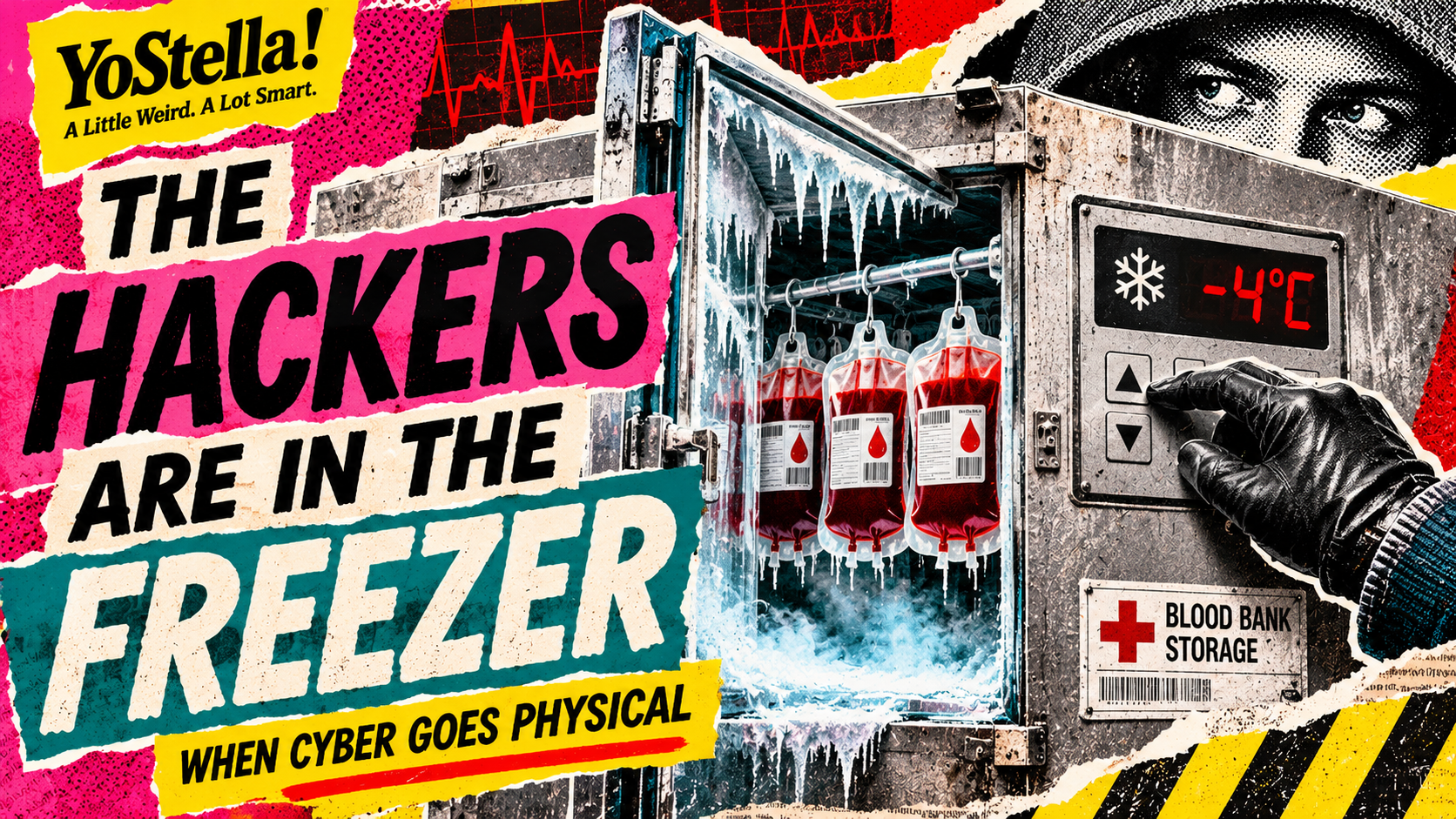
A cyberattack on a freezer sounds like a pretty lousy crime thriller. Until you discover what's inside.
Human blood.
In early November, hackers reportedly compromised refrigeration controls associated with three French blood-storage facilities, manipulating temperature and defrost settings on equipment used to preserve medical supplies. Fortunately, monitoring systems detected the interference, employees responded, and no blood products were lost.
Think about that. Someone sitting at a computer could potentially destroy lifesaving medical supplies by changing the temperature of a refrigerator.
Apparently, we've reached the point where the appliance repairman and cybersecurity department need to start exchanging phone numbers.
The Internet Has Escaped the Computer
Remember when the Internet of Things was going to make everything wonderful? Refrigerators that order milk. Thermostats that learn your habits. Factories that monitor themselves. All genuinely useful innovations, except for one small detail: connecting a physical machine to the internet potentially gives someone else a way to control it.
And sometimes that someone isn't the person you had in mind.
The French incident reflects a broader vulnerability extending well beyond healthcare. Connected systems manage supermarket refrigeration, pharmaceutical storage, manufacturing equipment, water treatment, and building operations. These aren't glamorous technologies, but they're essential to keeping modern life functioning.
Nobody stands in line overnight for a new industrial refrigeration controller. But when one fails, everyone suddenly becomes interested.
Who Actually Owns the Thermostat?
Here's where things get interesting. The attack reportedly involved systems associated with an equipment supplier, raising a question that reaches into nearly every modern business: who is responsible when the technology running your operations belongs to someone else?
A building owner hires a contractor. The contractor installs connected equipment. A software company provides remote monitoring. Another company maintains the network. Everyone has a perfectly reasonable job, but accountability becomes considerably less clear when something goes wrong.
The same connectivity that allows a technician to adjust equipment without driving across town can potentially give an attacker access to machinery that was never designed to defend itself.
Businesses spend considerable money protecting customer records, financial systems, and employee accounts. How many apply the same scrutiny to the connected equipment keeping their products safe, buildings operational, or manufacturing lines running?
Efficiency is wonderful until the savings depend on everything going exactly as planned.
The Humans Were Still in the Building
There's an important detail in the French incident that deserves attention: the protective systems worked. Alerts identified the problem, employees intervened, and the blood products remained safe.
That's not an argument against automation. It's a reminder that automation and resilience aren't necessarily the same thing.
Connected technology can recognize problems faster than people, monitor equipment around the clock, and prevent enormous losses. But businesses also need safeguards, clear responsibilities, and employees who know what to do when a system behaves unexpectedly.
The best technology doesn't eliminate human judgment. It makes that judgment more effective when something goes wrong.
The Next Cyberattack Might Not Steal Anything
For decades, we've imagined hackers as digital thieves stealing passwords, money, identities, and information. But an attacker manipulating refrigeration equipment doesn't have to steal a thing. The damage happens wherever the machine sits.
That's the bigger story. Cybersecurity is no longer exclusively about protecting information. It's increasingly about protecting the physical conditions that allow everyday life to function.
The hackers in France didn't destroy the blood supplies. Protective systems and people prevented that. But the incident exposed a vulnerability that's easy to overlook while everyone debates artificial intelligence and the next technological revolution.
We've connected the physical world to the internet. Perhaps it's time to ask whether we've done an equally good job protecting the physical world from the internet.
Because somewhere, right now, a perfectly ordinary refrigerator is doing a very important job.
And it really shouldn't need a firewall to keep the ice cream frozen.